
The Hydration Dial
Initially published July 16, 2026
The Run
Las Vegas in July does not negotiate. By mid-morning the pavement is past 40°C, and a walk that would be trivial in April becomes a physiological event. Run in it, and you are running a small experiment on your own thermoregulation.
The instrument that matters here is not the thermometer. It is WBGT, wet-bulb globe temperature, which folds in humidity, wind, and radiant load. Dry desert heat reads a lower WBGT than humid heat at the same air temperature, and that is protective: sweat evaporates instead of dripping, and evaporation is where the cooling happens. In a controlled comparison at 36°C, dry and humid air produced almost identical sweat rates. What humidity changed was efficiency. The fraction of that sweat that actually cooled the body collapsed from about half to a sixth.
The trap is that dry heat hides the cost. You do not feel drenched, so you underestimate the loss. Adults walking and jogging at 40°C in 20 to 30% humidity lose about 1.3 litres of sweat an hour. It evaporates the instant it surfaces, and the deficit is invisible until it isn’t.
The Dial, Not the Slider
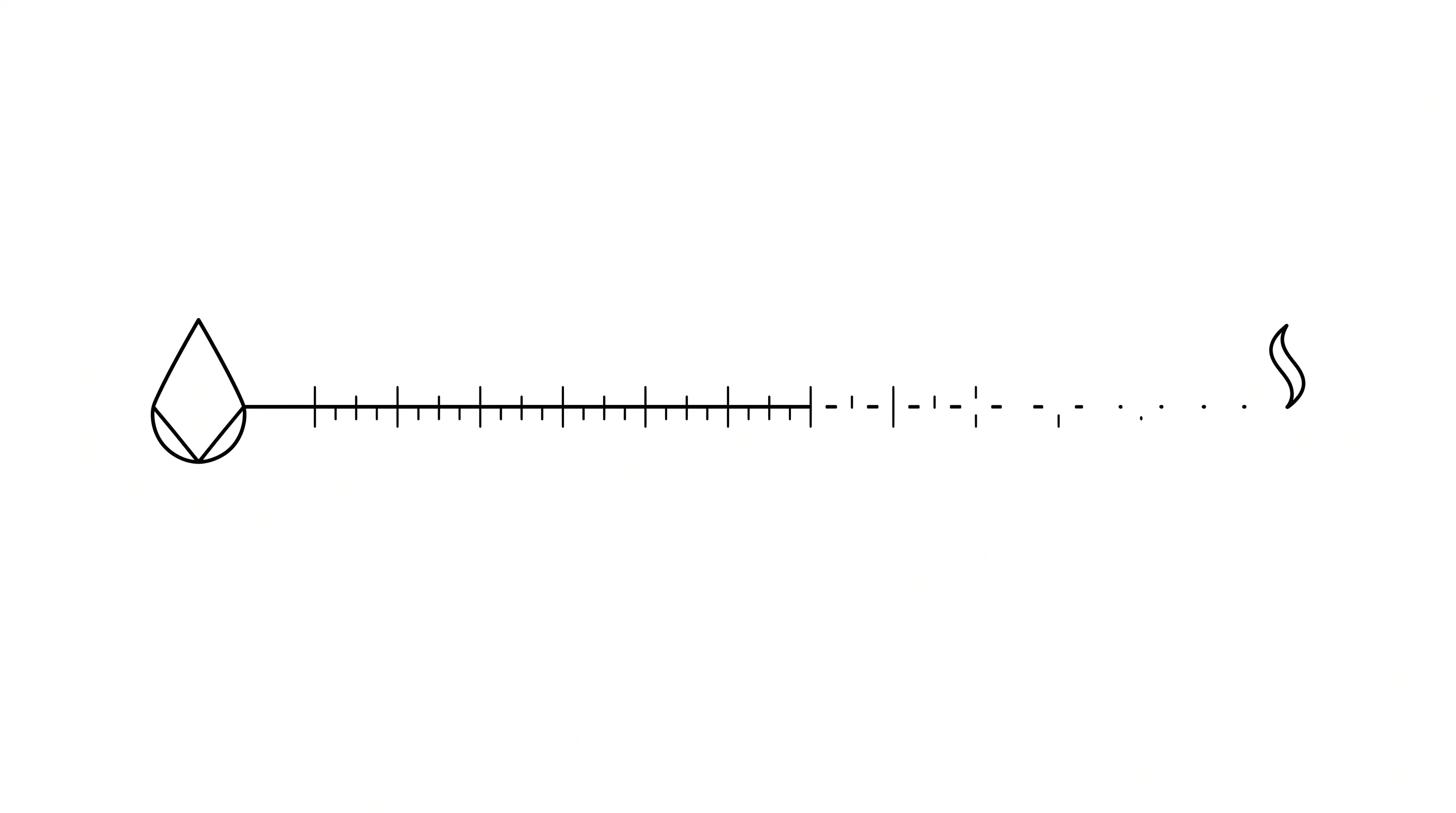
Most hydration advice is a slider: more is better, drink until your urine runs clear, never let thirst arrive. The physiology is a dial.
The number everyone cites is 2%. Lose that much body mass in fluid and performance degrades. It is a real threshold, but a soft one. It bites in the heat and barely registers in the cold, the effect sizes are contested, and much of the alarming literature used study designs that inflate them.
The slider also ignores the other end of the dial. Drink ahead of thirst, past what you are losing, and you court exercise-associated hyponatremiahyponatremiaHyponatremia is a dangerously low concentration of sodium in the blood. In exercise it comes from drinking more fluid than the kidneys can clear, which dilutes the blood, rather than from losing salt in sweat.: blood sodium diluted low enough to be dangerous. It showed up in roughly one in eight sampled Boston Marathon runners, and every extra kilogram of weight gained during the race doubled the odds. The cause is overdrinking rather than low salt, and the fix is thirst, not a salt tablet.
So the dial has two failure modes, and the honest target is the middle: replace what you lose, no more.

What Salt Actually Does
This is where electrolytes earn their place, and it is narrower than the marketing suggests. Sodium’s proven job in a drink is retention. Water with meaningful sodium stays in you. Plain water runs through. After exercise dehydration, a sodium drink retained about 71% of the fluid against 37% for sodium-free water. That is the mechanism worth paying for.
My post-run bottle is 750 mL with half a packet of LMNT, about 500 mg of sodium, or 667 mg per litre. That lands squarely inside the sports-medicine range of 500 to 700 mg per litre for efforts over an hour in the heat. It is the part of my routine I am most confident about.

What salt does not reliably do is prevent hyponatremia while you are overdrinking, and it is not a general health tonic. Peri-exercise sodium and dietary sodium are two different questions, and conflating them is how a reasonable practice becomes a bad habit.
The Sodium Argument
Which brings up the argument the electrolyte brands would rather skip. Is more salt fine, or not?
The science is unresolved, and both camps have real evidence. The PUREPUREPURE, the Prospective Urban Rural Epidemiology study, is a large multi-country cohort that estimated each person’s daily sodium intake from a single spot urine sample. study, tracking over 100,000 people, found a J-curve: the lowest cardiovascular risk sat at a moderate 3 to 5 grams of sodium a day, with risk rising at both ends.
Against it stand the trials the guideline bodies trust more. TOHPTOHPTOHP, the Trials of Hypertension Prevention, measured sodium with repeated 24-hour urine collection, the gold standard, in its long-term follow-up., using gold-standard 24-hour urine collection, found risk rising in a straight line with sodium, no safe floor in sight. SSaSSSSaSSSSaSS, the Salt Substitute and Stroke Study, was a randomized trial in rural China that swapped regular salt for a potassium-enriched substitute and tracked strokes and deaths., a randomized trial in nearly 21,000 people, cut strokes and deaths by swapping in a potassium-enriched salt. The critique of PURE, that estimating a day’s sodium from a single spot urine warps the curve, is fair, but the National Academies concluded it “may explain part” of the J, not manufacture it whole. And SSaSS lowered sodium while raising potassium, so it cannot cleanly indict salt alone.

Where does that leave my morning litre with a full packet, a gram of sodium before I have eaten anything? That is the part I now hold loosely. A gram at rest is a large fraction of a day’s recommended intake, taken when I am not sweating, and the weight of the trial evidence leans toward less resting sodium. It is also lopsided: my mix runs five parts sodium to one part potassium, while the literature that matters for blood pressure rewards the opposite ratio. Potassium lowers pressure about as much as cutting sodium does, and it is the electrolyte the packets skimp on.
Honestly, still figuring the ROI of that one out. I know it forces me to drink in the morning to prepare for long days, so that’s a win.
The Longevity Claim, Honestly
There is a seductive study behind the “hydration slows aging” headline, and it deserves to be quoted accurately. Following 11,000 adults for decades, researchers found that higher-normal serum sodium, a proxy for running slightly under-hydrated, tracked with faster biological aging and higher mortality. Above 144 mmol/L, the odds of being biologically older than your years rose by half.
That is an association, and it carries the weakness of all associations. Serum sodium creeps up for reasons that are themselves signs of aging (declining kidney function, a blunted thirst response), so the arrow may point backwards. A separate analysis found the curve U-shaped rather than linear. Another large cohort found more water intake tracking with more coronary disease. And the decisive test does not exist: not one randomized trial has taken healthy people, made them drink more, and measured whether they age slower or live longer. Eighteen water-intake trials have been run. None used aging, cardiovascular events, or mortality as an endpoint.
So “drink water, live longer” is not proven. It might even be the wrong shape. What survives is milder and still worth having: chronic under-hydration is a low-grade stressor, and staying in the normal range is a reasonable bet, placed with humility rather than certainty.
What Hydration Doesn’t Do
The wellness version of hydration promises a clearer mind and better skin. The evidence is thinner than the promise.
The cognitive hit from mild dehydration is small, and at the level most people actually reach (under 2% loss) it is not statistically robust: the confidence interval crosses zero. Attention is the one function that reliably suffers when you push further. Skin is worse for the marketing. Drinking more water measurably helps skin hydration only in people who were under-drinking to begin with, and the studies are few and biased. For anyone already adequately hydrated, more water does not buy a better complexion.
Glucose is the one I watched personally. On a continuous monitor, my readings moved with hydration even when food didn’t change. That is a real observation, and it is mine alone. It does not generalize. In healthy adults, controlled trials show hydration barely touches glucose. The effect appears only in diabetes. My monitor was an experiment on me, not a physiology lesson for everyone, and I hold it that way.
The Dial
So here is the routine, sorted by how firmly I hold each piece. The post-run bottle (750 mL, half a packet, 667 mg of sodium a litre) is settled science. The middle of the dial, replacing what you lose and respecting thirst in both directions, is settled physiology. The morning gram of sodium at rest is a habit I keep on probation. And the promise that any of it slows my aging is a hope I have declined to believe on the current evidence.
Hydration is a dial. The skill is knowing where the middle is, and being honest about the parts of it that are still for sale.
References
Dmitrieva, N. et al. (2023). Middle-Age High Normal Serum Sodium and Accelerated Aging.
eBioMedicine, ARIC cohort: higher-normal serum sodium tracked with faster biological aging, more chronic disease, and higher mortality, observational.
O’Donnell, M. et al. (2014). Urinary Sodium and Cardiovascular Events (PURE).
NEJM: a J-shaped association, with lowest risk at an estimated 3 to 5 grams of sodium a day, from a single spot-urine estimate.
Neal, B. et al. (2021). Salt Substitution and Cardiovascular Events (SSaSS).
NEJM: a potassium-enriched salt substitute cut strokes, major cardiovascular events, and deaths across nearly 21,000 participants.
Cook, N. et al. (2014). Sodium Intake and Cardiovascular Risk (TOHP).
Circulation: using repeated 24-hour urine collection, cardiovascular risk rose in a straight line with sodium, with no clear floor.
Shirreffs, S. & Maughan, R. (1998). Rehydration and Fluid Balance After Exercise.
American Journal of Physiology: a sodium-containing drink retained about 71% of ingested fluid versus 37% for sodium-free water.
Almond, C. et al. (2005). Hyponatremia Among Marathon Runners.
NEJM: about one in eight sampled Boston Marathon runners were hyponatremic, driven by overdrinking, with weight gain the strongest predictor.
Goulet, E. et al. (2023). Fluid Balance During Exercise in the Heat.
Nutrients: adults exercising at 40°C in low humidity lost about 1.3 litres of sweat an hour and voluntarily replaced roughly 80% of it.
Wittbrodt, M. & Millard-Stafford, M. (2018). Dehydration Impairs Cognitive Performance: A Meta-Analysis.
Medicine & Science in Sports & Exercise: a small overall cognitive effect, driven by attention, and not robust at the mild losses most people reach.
Dindin, M. (2026). Ten Minutes of Red.
The morning routine, red light and a walk, that this run belongs to.
Dindin, M. (2026). Eating Once a Day.
The continuous-glucose-monitor experiment behind the note on hydration and blood sugar.