
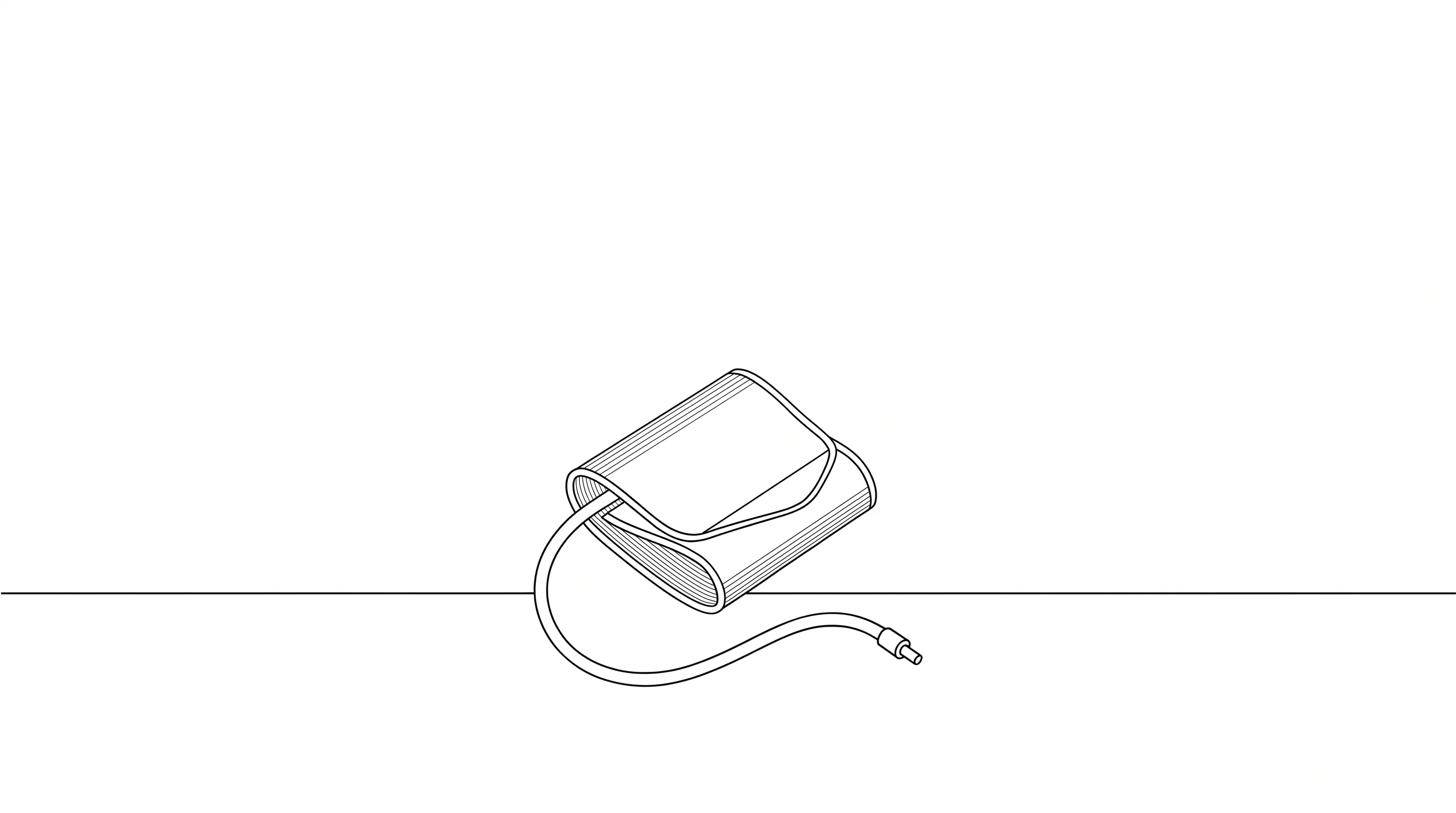

The Pressure Ritual
Initially published October 26, 2026
Three Readings, Three Labels
One morning my OMRON gave me 160, then 126, then 123 systolic, a couple of minutes apart. Two days later it was 152, 130 and 130. That same evening, 133, 122 and 114, which by systolic alone runs from stage 1 hypertension to elevated to normal inside five minutes.
I had started measuring twice a day, after waking up and before bed, usually three readings in a row. The readings belong to a two-week comparison: an ordinary control week against a week that includes a 72-hour fast, with a blood test at the end of each, and grip strength, sleep and exercise tracked alongside. The first was usually the highest, and the spread drove me nuts. Which one is my blood pressure?
Why the Number Matters
My dad just had three stents placed in the arteries around his heart. A coronary artery calcium scan during a routine check-up in France had flagged the plaque clogging them, and the second procedure put him in a heart-attack-like state for 45 minutes.
I’d like that measurement for myself. Ezra, now part of Function, sells the scan for $349: a five-minute, low-dose CT timed to the heartbeat that scores calcium in the coronary arteries. It’s only offered to adults aged 35 to 85, so for now it’s out of reach. In the meantime, blood pressure is one of the few inputs to coronary disease I can measure at home and act on.
Lowering it has randomized evidence behind it. In SPRINT, adults at high cardiovascular risk treated to a systolic target under 120 had 25% fewer major cardiovascular events and 27% lower all-cause mortality than those held under 140, and the trial was stopped early.
The damage is slow and silent. Sustained pressure stiffens arteries, thickens the heart wall and scars the tiny vessels the kidneys filter through, years before anything hurts. Across pooled US cohorts, lower cumulative systolic pressure over a decade went with about four more years of survival, and nearly half of US adults have hypertension by the CDC’s count.
That is why a number that moves 30 mmHg within one sitting is a problem. A treatment decision, or a lifestyle change judged a success, rests on a reading that has to be taken the same way every time.
How to Read the Number
A cuff reports two pressures in millimeters of mercury. The top number, systolic, is the peak pressure in the arteries while the heart contracts. The bottom number, diastolic, is the pressure left between beats, while the heart refills. Most monitors add the pulse underneath.

The 2025 AHA/ACC guideline sorts readings into four categories, and when the two numbers land in different ones, the higher category counts. The categories describe an average of careful readings taken on separate occasions. A single reading of 124/63, one of mine from the last morning, is elevated by systolic alone and says little until it is averaged with the rest of the week.
The First Reading Runs High
Chrubasik-Hausmann et al. tracked home triplicates and found the first reading about 3 to 4 mmHg above the next two on average. The pattern is real, but small, and it fails in roughly a third of sittings.
My first three sittings sat far outside that. The first reading beat the mean of the others by 33, 22 and 15 mmHg. The usual explanation is an alerting reaction to the cuff and to the act of measuring, though nobody has isolated it experimentally.
Midweek I started resting my forearm on the table instead of letting it hang, and the gap shrank: 3 mmHg or less in four of the last five sittings, with an 11 on the last morning. Two things changed at once, the arm and my familiarity with the routine, and two extreme starts would regress toward the mean anyway, so I can’t credit the table alone. I keep every first reading in the log regardless, since deleting the high ones after seeing them would bias the average down.

The Cuff Comes First
My monitor is an OMRON BP5150, listed on ValidateBP, the American Medical Association’s registry of devices that passed an independent accuracy protocol. Most monitors on the market have no such record. In Picone et al.'s survey of Australia’s online marketplace, fewer than one in ten models had been validated, and none of the wristbands.
Cuff size is the single largest error in the literature. In a randomized trial by Ishigami et al., a regular cuff on an arm that needed an extra-large one read 19.5 mmHg high on average. The BP5150’s cuff covers 22 to 42 cm of arm circumference, and my arm sits inside that range.
The device also has to stay the same. Oscillometric algorithms are proprietary and differ between models, so the American Heart Association treats devices as non-interchangeable. Switching monitors mid-series adds a variable I’d then have to explain away.
The Arm Cannot Hang
Arm position moves the reading by several mmHg on its own. In Liu et al.'s randomized crossover trial, resting the arm on the lap read 3.9/4.0 mmHg higher than supporting it on a desk, and letting it hang at the side read 6.5/4.4 higher.
The mechanism is hydrostatic. A cuff below the heart sits under a taller column of blood, so the reading rises with every centimetre the arm drops below heart level. The arm has to rest on a surface with the middle of the cuff at heart height.

An unsupported back and crossed legs push the reading up as well, as do talking and a full bladder, by amounts that vary from a few mmHg to well over ten across studies. A thin sleeve barely matters: a randomized comparison found under 1 mmHg of difference, against the 10 to 50 mmHg repeated on clinical tip sheets without a study behind it.
These errors are mostly bias, and bias that stays constant cancels out of a comparison between weeks. What breaks a series is a setup that changes from one sitting to the next. That is why the posture matters less as a correction than as a fixed condition.
The Wrist and the Ring
WHOOP and Oura now put blood pressure on the wrist and the finger. WHOOP’s Blood Pressure Insights estimates nighttime systolic and diastolic ranges each morning from the overnight optical pulse signal, after you calibrate it against three cuff readings. Oura’s Blood Pressure Signals, announced alongside Ring 5 in May 2026, looks for patterns in 30 days of nighttime pulse data and shows no systolic or diastolic numbers at all.
The FDA warned WHOOP in July 2025 that estimating blood pressure is a medical device claim. In January 2026 it revised its general wellness guidance to stop enforcing device rules on low-risk wellness products that estimate blood pressure, provided they stay out of diagnosis and clinical management, and in June 2026 it closed the WHOOP letter after the company changed the feature and its labeling. Neither feature is cleared as a medical device.
My week makes me skeptical of the calibration step. Arm position alone shifts a validated cuff by 6.5 mmHg, reading order shifted mine by 33, and those cuff readings are what WHOOP anchors to. Calibrate with the arm hanging, or on a first reading, and every estimate after it inherits the error. The optical signal also responds to things the cuff ignores, such as autonomic tone, hydration and arterial stiffness, and in my own months with WHOOP it read a few points below the OMRON and drifted between calibrations.
WHOOP’s own calibration screen shows the gap. The checklist asks for the arm supported at heart level, while the drawing above it rests both hands on the thighs, cuffed arm included: the lap position that read 3.9/4.0 mmHg high in the ARMS trial. Anyone who copies the picture rather than the list starts every estimate from a biased anchor.


I use the wearables as trend detectors that tell me when to get the cuff out. The number I act on comes from the cuff, taken the same way every time.
Average the Week
The American Heart Association and the European Society of Hypertension prescribe the same structure: two readings a minute apart, morning and evening, for seven days, then the average of everything. In the IDHOCO pooled database, the category a person landed in stopped changing after about six days of measurement.
My week produced 32 readings across 11 sittings. Single readings ranged from 113 to 160 systolic. The average was 125/68, elevated, and the same systolic as my 12-month OMRON average.
The Ritual
The protocol fits in a few lines. A validated upper-arm cuff in the right size, on bare skin, after waking up and before bed. Empty bladder, no caffeine, exercise or nicotine in the previous 30 minutes, then five minutes seated in silence: back supported, feet flat, legs uncrossed, forearm on the table at heart height.
Two or three readings a minute apart, all of them logged, the first included. Seven days, one average, compared only with another week measured the same way. That is what the fasting comparison depends on: if the protocol drifts between the two weeks, the gap between their averages says more about the protocol than about the fast.
The number belongs to the protocol as much as to my arteries, so the protocol is what I keep fixed.
References
Chrubasik-Hausmann, S. et al. (2014). Comparisons of Home and Daytime Ambulatory Blood Pressure Measurements.
BMC Cardiovascular Disorders: across 5,997 home triplicates from 270 people, mean systolic ran 126, 123 and 122 mmHg.
Picone, D. et al. (2020). Nonvalidated Home Blood Pressure Devices Dominate the Online Marketplace in Australia.
Hypertension: 64 of 972 models validated (6.6%), including 18% of upper-arm, 8% of wrist and none of the wristband devices.
ValidateBP. Bronze Upper Arm Blood Pressure Monitor (BP5150).
The American Medical Association’s validated device listing: validated to ISO 81060-2, cuff range 22 to 42 cm.
Ishigami, J. et al. (2023). Effects of Cuff Size on the Accuracy of Blood Pressure Readings (Cuff(SZ)).
JAMA Internal Medicine, randomized crossover in 195 adults: a regular cuff read 4.8 mmHg high on large arms, 19.5 high on extra-large arms and 3.6 low on small arms.
Muntner, P. et al. (2019). Measurement of Blood Pressure in Humans.
AHA scientific statement: home protocol, device non-interchangeability, and posture errors including an unsupported back (up to 5 to 15 mmHg systolic) and crossed legs (5 to 8).
Liu, H. et al. (2024). Arm Position and Blood Pressure Readings (ARMS).
JAMA Internal Medicine, randomized crossover in 133 adults: lap 3.9/4.0 mmHg and hanging arm 6.5/4.4 mmHg higher than desk support.
Netea, R. et al. (1998). Influence of the Arm Position on Intra-Arterial Blood Pressure Measurement.
Journal of Human Hypertension: intra-arterial pressure shifted 3 to 4 mmHg for every 5 cm the arm moved from heart level.
Kallioinen, N. et al. (2017). Sources of Inaccuracy in the Measurement of Resting Blood Pressure.
Journal of Hypertension, systematic review: talking raised systolic pressure by 4 to 19 mmHg across studies.
Fagius, J. & Karhuvaara, S. (1989). Sympathetic Activity and Blood Pressure Increases with Bladder Distension.
Hypertension: in 16 healthy volunteers, pressure rose from about 125/74 to 140/84 at a strong urge to urinate.
Ma, G. et al. (2008). Blood Pressure Measurement Over a Sleeved Arm Versus a Bare Arm.
CMAJ, randomized in 376 adults: a thin sleeve changed systolic readings by 0.76 mmHg, not significant.
Parati, G. et al. (2021). Home Blood Pressure Monitoring: Methodology, Clinical Relevance and Practical Application.
Journal of Hypertension, ESH position paper: duplicate morning and evening readings for seven days, averaged.
Niiranen, T. et al. (2015). Optimal Number of Days for Home Blood Pressure Measurement (IDHOCO).
American Journal of Hypertension: blood pressure classification stabilized after about six days of home measurement.
Kyriakoulis, K. et al. (2022). Home Blood Pressure Monitoring Schedule: Optimal and Minimum.
Journal of Hypertension, 2,122 participants: day one ran about 2.8/1.4 mmHg higher, and values settled after day three.
Jones, D. et al. (2025). 2025 AHA/ACC Guideline for the Management of High Blood Pressure in Adults.
Hypertension: normal below 120/80, elevated at 120 to 129 systolic, stage 1 from 130/80, stage 2 from 140/90.
SPRINT Research Group (2015). A Randomized Trial of Intensive versus Standard Blood-Pressure Control.
NEJM: a systolic target under 120 versus under 140 cut major cardiovascular events by 25% and all-cause mortality by 27% in 9,361 high-risk adults.
Lifetime Risk Pooling Project (2021). Cumulative Systolic Blood Pressure and Long-Term Cardiovascular Risk.
Hypertension: lower 10-year cumulative systolic pressure went with 4.1 years longer survival across five US cohorts.
CDC. High Blood Pressure Facts.
US prevalence, awareness and control of hypertension.
FDA (2025). Warning Letter to WHOOP, Inc.
July 2025: Blood Pressure Insights treated as a medical device marketed without clearance.
FDA (2026). Close-Out Letter to WHOOP, Inc.
June 2026: no enforcement against Blood Pressure Insights as modified, under the revised general wellness guidance.
FDA (2026). General Wellness: Policy for Low Risk Devices.
January 2026 revision extending enforcement discretion to low-risk wellness products that estimate blood pressure, provided they stay out of diagnosis and clinical management. It is not a clearance.
Reuter, E. (2026). Ōura to Add Blood Pressure Feature Following FDA Policy Change.
MedTech Dive, May 2026: Ring 5 blood pressure signals show overnight trends, no systolic or diastolic readings, as a wellness feature.
Ezra. Heart CT Scan.
A $349 gated low-dose CT that produces a coronary artery calcium score, sold alongside Ezra’s MRI scans.
Function Health. Heart Attack Prevention.
The coronary calcium test is offered to adults aged 35 to 85.
Dindin, M. (2026). Pressure Reading.
Why the number matters in more depth, and my months calibrating WHOOP against the cuff.